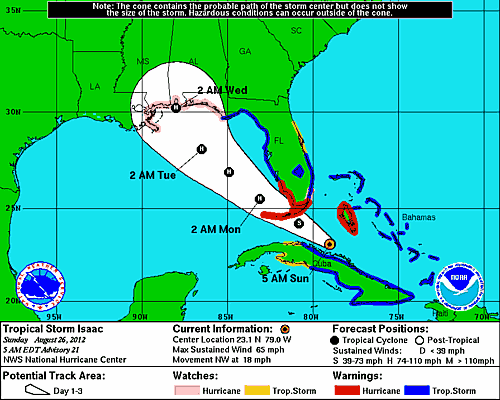
Isaac

So we’ve been watching this with interest.

We live to the right of Mobile Bay (it’s covered up by that 2am Wed dot).

Time to double check the battery stash. Ellie doesn’t like candles.

Update: The track has moved significantly West. We’re out of the Cone of Probability (no brownies) but the warning isn’t lifted yet. And since they already gave evacuation orders to Orange Beach, everybody is out of school for three days.

Mindful Fiber: August is Cotton and Dish Cloths

Some of my favorite yarns are made from cotton.

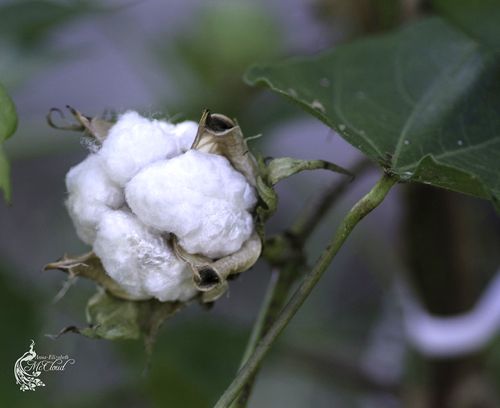
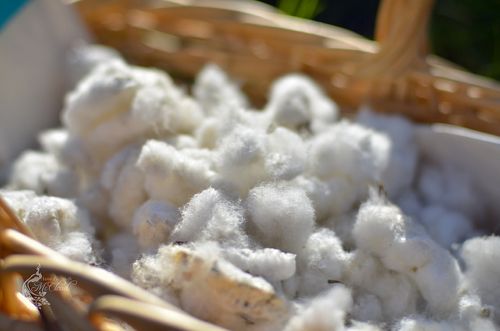
cotton

All the cotton pictures are courtesy of my darling sister, Anna Elizabeth McCloud. I’ve reserved her rights.

This isn’t even a little surprising: cotton fulfills about half of the world’s fiber needs. It is also one of the most chemically dependent crops since 16-25% (depending on who is doing the reporting) of the world’s insecticides -more than any other major crop- are used in production. As much as 1/4 of a pound of chemicals are used to produce enough cotton fiber to create a single t-shirt. That’s hard on the environment, rough for the farm workers and not especially healthy for the wearer of the t-shirt.

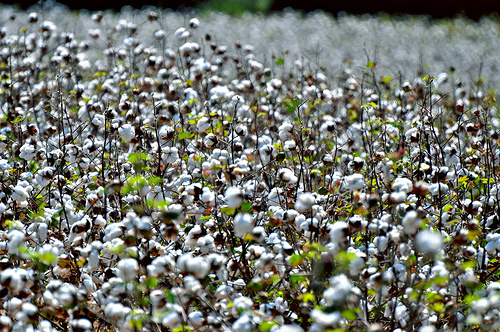
SO MUCH COTTON

all rights reserved by Anna Elizabeth McCloud

In response to consumer concerns, the conventional cotton industry claims to have spent the past 50 years making a concerted effort to improve sustainability and increase crop yield without destroying the environment*. According to mainstream industry publications, research and technology has made it possible to reduce the amount of pesticide use by as much as 50% while increasing yield by the same percentage. As biodiversity and modern farming techniques (contour plowing, planting trees to prevent soil erosion, soil profiles) become more widespread, the carbon footprint of cotton crops will be reduced.

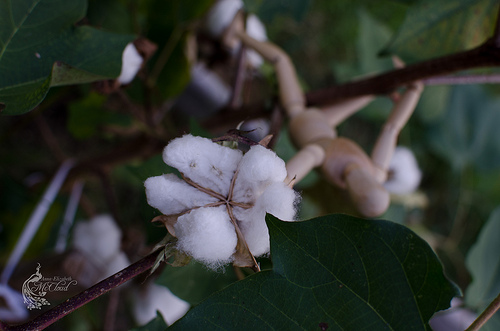
cottons!"

all rights reserved by Anna Elizabeth McCloud

But what does that really mean? The 50% reduction in pesticide use only refers to the amount of chemicals used on the plants themselves. It does not speak to the toxicity of the chemicals or whether the farms have reduced the amount on the fields because they practice ‘area-wide’ pest control. If the increase in yield is thanks to growing 75% of the world’s cotton from genetically modified* seeds, is that really helping anything in the long run? Happily, there is another choice: organic cotton is grown without the use of toxic or persistent pesticides and synthetic fertilizers. This means that organic production depends on its ability to replenish and maintain soil fertility as well as build biologically diverse agriculture. Federal regulation prohibits the use of genetically engineered seed for organic farming. All cotton sold as organic in the United States must meet federal regulations regarding how the cotton is grown.

more cotton

all rights reserved by Anna Elizabeth McCloud

Whether organic or not, cotton fiber is processed with the same basic steps: harvest, clean, spin, do something with the yarn (I’m sure you’ve all heard about Eli Whitney and the cotton gin, and have a basic understanding of how fiber is spun into yarn.). The difference is that organic cotton is not bleached or chemically treated during processing and, if you pick a color-grown shade, it’s not even dyed. With conventional cotton, only the spinning process is devoid of chemicals. Formaldehyde, chlorine, and assorted anti-wrinkling agents are just a few of the things avoided when organic cotton is purchased. Organic cotton does have a premium price tag in most cases. Some of that is due to trend, but there is a higher cost in production that must be weighed against the long-term cost that conventional farming has on the environment when selecting a yarn.

But wait, there is another option that is both planet and pocket friendly! Recycled Cotton!
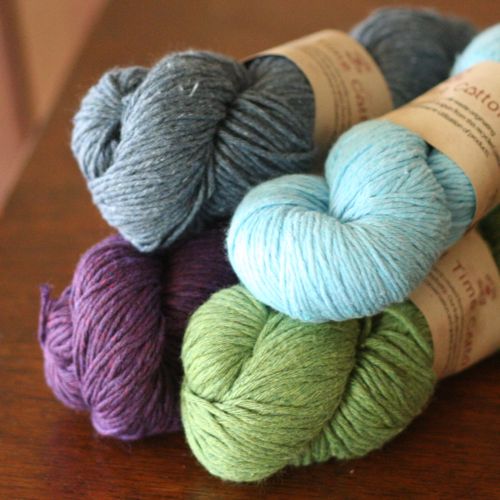
pretties

Featured Yarn: 2nd Time Cotton from K1C2

Cotton is recycled by collecting the waste, scraps and excess yarn that is left over during clothing production. The bits and pieces are shredded down to fibers, sorted by color and then spun into ‘new’ yarn. The recycled cotton fibers are often plied with another fiber for added strength. In my experience this secondary fiber is typically acrylic, but that is often derived from recycled sources as well. Recycling takes less time and money and avoids a large chunk of the environmentally harmful aspects of cotton by skipping over growing and dyeing. Recycled cotton is used as polishing and wiper cloths in industry and has been made into paper – the fibers are used as stuffing for cushions! But who cares about that? We’re knitters. We like yarn.

For August, I’ve got a pattern for everyone and yarn for a few.

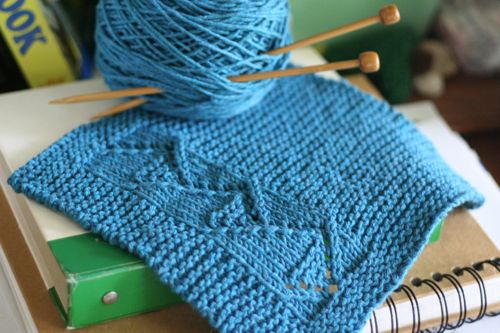
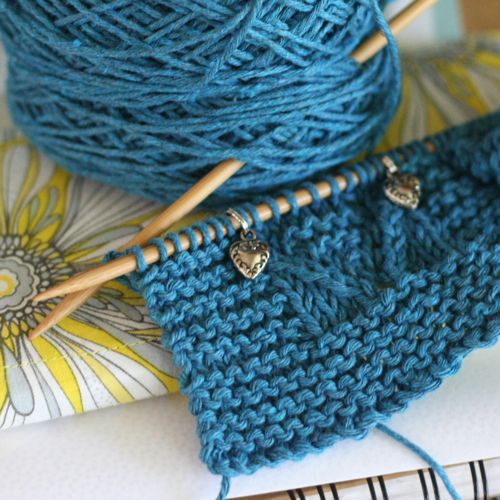
That’s Hiatus, the dish rag for while you are waiting for the Return of Dish Rag Tag. It’s not designed for speed. It’s designed for pretty. And relaxation. A delightful change. Hiatus is available as a freebie on Ravelry and will be on my free patterns page as soon as I remember how to make that happen. As for the yarn, I’ve got a skein of 2nd Time Cotton (see above) from Knit 1 Crochet Too for two winners drawn at random from the comments AND for the first two people to knit through the Hiatus pattern and send me notes! Congratulations to C.C. and Jenipurr, the first two knitters through the pattern! That was so fast you made my head spin! As near as I can tell, a skein of 2nd Time Cotton is enough for three dish cloths – or a larger project of your choosing. It’s actually got a real nice hand. I’m not usually a fan of acrylic content, but in this application it makes a nice addition. Also? Made in the U.S.A. You don’t get that often in a yarn.

Get to commenting! Get to knitting! This giveaway will be closed on August 28, so leave a comment on this post before then for your chance to win. If you can’t wait to order some cotton of your own, Green Sheep Shop is offering 20% off on all cotton and cotton-blend yarns for August. Coincidence is a crazy thing.
*Interestingly, until about 50 years ago, the majority of the world’s cotton crops were still produced with sustainable, traditional farming practices. Practices that already included crop rotation, natural fertilizers and satisfaction with the plant’s built in ability to withstand drought and tolerance of less than pure water.
**It’s not that I have a problem with better living through science. It’s that I have a problem with Monsanto. I have a problem any company that has a choke-hold on congress and wants to hold the world’s food supply hostage with lawsuits.

Dish Rag Tag: On Hiatus

a new one

Contemplative knitting.

By now, I am sure most of you have realized that there won’t be a Dish Rag Tag this year. There are two big reasons for this. Reason 1: The ap really needs to be rewritten. Apparently software (like everything else) gets old. Michael asked what would happen if the ap just stopped working in the middle of the race and I had to go lie down. Reason 2: There is way too much going on.

I’m working on a little something (see illustration above) to tide you over during the break. In related news: there will be a new Mindful Fiber next week.

I am very sorry for this, I know that many of you will be disappointed. I’m disappointed. But think about what would happen if the ap stopped working in the middle of the race.

If you have to go lie down, I understand.

What I Did

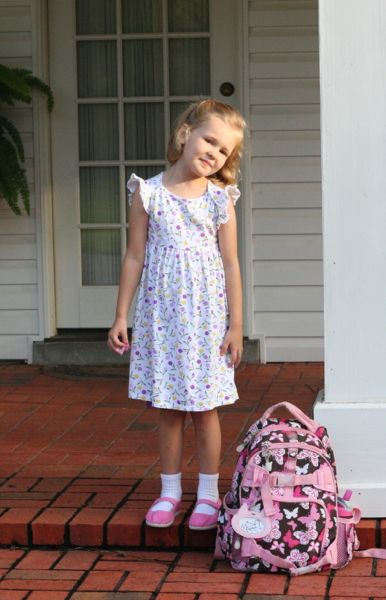
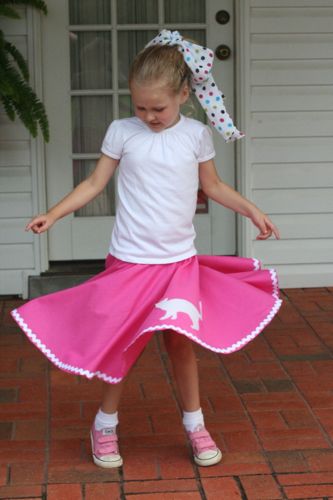
Last Friday, Ellie’s little school had a 50s day. So I made this:

kitty skirt

A kitty skirt. That’s better than a poodle skirt because of the kitty.

That skirt part was easy because of this tutorial. The hard part was that my sewing machine is at the beach with Mom. So I had to use this one:

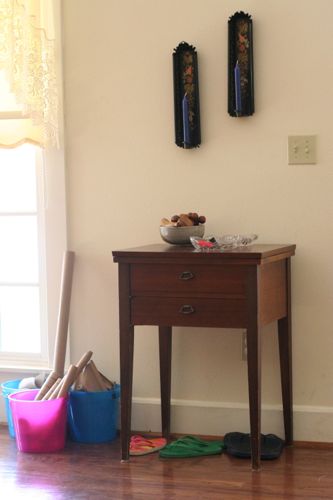
folded up

Wait for it…

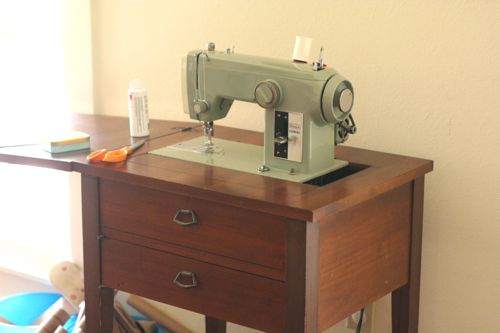
I mean this one:

tadah!

Ta-Dah!

That’s my Granny Nix’s Kenmore from 1968. It weighs at least one thousand pounds. It was only manufactured for two years. I have no manual. It took Google and me three hours to figure out how to oil the thing, thread the machine, wind the bobbin*, get the bobbin back where it goes and put a new needle in the right way**.

It’s not like I brokered world peace, taught Congress some ethics or revolutionized health care in America, but I’m still pretty proud of myself. More skirt pictures on the Flickr.

*Tip 1: This model has a plate on the end of the wheel that advances the needle. That plate comes loose to disengage the machine so you can wind the bobbin.
**Tip 2: There is a groove along one side of a sewing machine needle. The grove should face the bobbin. You may have to thread the needle from left to right instead of front to back depending on where the bobbin is on your machine.

Mindful Fiber July: The envelope, please?

My Random Number Generators (one is more random than the other) have chosen 14 and 23 as the numbers this month! Counting down and skipping my own comment, our winners are

Susan and Lesley

Wooo!

Hooo!

Your Quince&Co. Sparrow will be in flight this week! Thanks so much to everyone for making this so much fun for me, and many thanks to Quince&Co. for putting such thought into their yarns.

We’ve got one more month of summer and one more warm-weather yarn! Stick around for August and more Mindful Fiber!

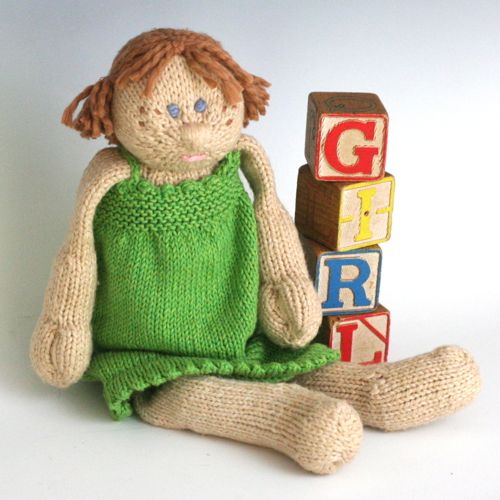
G is for Girl

Got the Girl ready to go!

here she is!

You can find her on Ravelry and in my Etsy shop. Early Adopters, I suggest Ravelry since it is easier to get updates to you. It’s a 12 page pattern. There are bound to be updates.

If anybody decides to design additional clothes for this little lady and decides to share the patterns, please please let me know! I’ll add links and credits and praise to the pattern listings.

Mindful Fiber Winners will be announced later today!

PS I know the site looks rather awkward. The theme is undergoing an update (it’s possible that’s how the spammers were exploiting Yarn Miracle) and some things have gone wacky. Like centering, captions and footnotes. It’s a process.

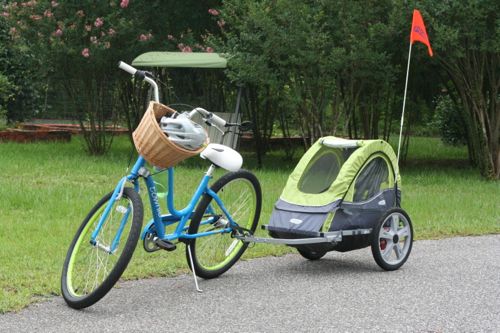
Transportation

electra and trailer

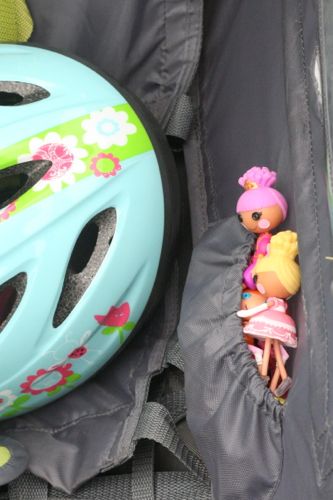
How we like to travel.

To school, to the grocery store, to the library, to Bell’s for coffee, to the Mexican restaurant, to the vet (but only without cats).

friends

There’s lots of room for friends.

12 Months of Mindful Fiber: July with Linen from Quince & Co.

It’s July. It’s hot. It’s time for linen.

Linen is one of the greenest fabrics in the world. Flax, the plant that linen comes from, grows well with just naturally occurring precipitation and requires minimal pesticides and chemical fertilizers even when not categorized as ‘organic’. Flax has been cultivated for fiber since at least 3,000 B.C. Egyptian mummies were wrapped in it, folks in the Middle East have worn it for centuries, it’s mentioned several times in the Bible and was valued as a commodity by the Greeks and Romans. All that before being introduced to Europe and then to the Americas.

Linen takes a while to process. The seeds have to be removed (rippling). The entire plant must be soaked in water, acid or chemicals to decompose the bark and pectin so the fiber can be removed as long strands (retting). Strands are dried, combed and spun into a thread or yarn. All of this makes for a product that is more expensive, but it is also a higher quality product. Linen yarn is absorbent, moisture-wicking and softens beautifully with washing, age and use.

not flax

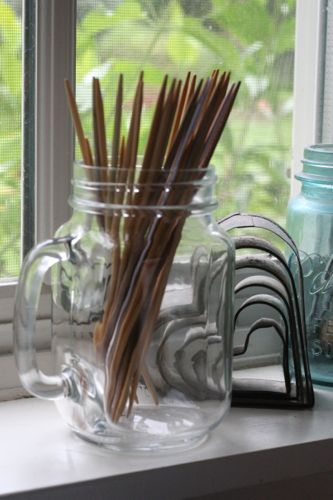
Where the spare DPNs live.

Knitting with linen is like knitting with anything else: you have to Know Your Fiber. Linen is slippery, so choose wooden or bamboo needles – they have a little grip to them that you will appreciate! If you’ve chosen a yarn with a loose twist, choose needles with a rounded point to prevent split stitches. Linen is not at all elastic, which means that it will not snap back into shape like wool does. It will relax, it will drape, it will soften with age. Great qualities for shawls, but your gauge should be TIGHT for other garments so that your finished product keeps it’s shape. If you opt to substitute linen for another fiber: swatch swatch SWATCH. And WASH your swatch! Linen changes dramatically with washing – it blooms and softens so be sure to check your gauge after washing, not before.

**This giveaway is closed! Join us in August for more Mindful Fiber!**

Want to give it a try? The pattern this month is exactly right for a linen “taste test.”

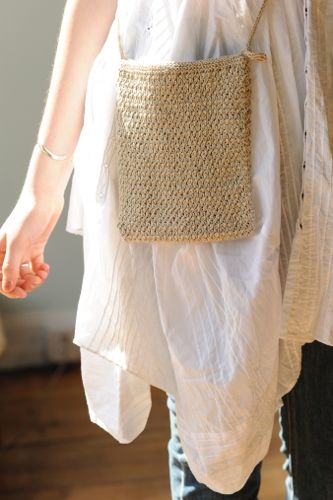
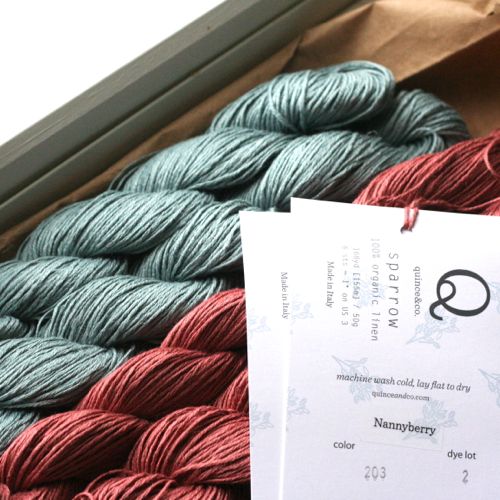
To make this little bag with its long shoulder strap, you’ll need two skeins of Sparrow, an organic linen grown in Belgium, from Quince & Co..

Blue Spruce and NannyBerry (picked for the name AND the color)

Quince & Co. was founded by two knitware designers and the owner of an historic spinning mill. Together, they have created “a line of thoughtfully conceived yarns spun from American wool or sourced from overseas suppliers who grow plants, raise animals, or manufacture a yarn in as earth- and labor-friendly a way as possible. We think we can have our yarn and knit it, too.”

Quince & Co. sells their yarns directly from their website, and I encourage you to run over and take a look at the other yarn lines, you’ll find something special. Rest assured that the something special is available in an absolutely splendid color.

**This giveaway is closed! Join us in August for more Mindful Fiber!**

I’ve got enough linen for two July winners, PDF patterns will be delivered by email (thank you for your versatility, Ravelry). To win this month’s Mindful Fiber, just leave a comment before July 24, 2012!

Carrie Hoge holds the copyright on the le petit sac photograph. it is used with permission.

Tomato Tomahto

How about some fresh marinara?

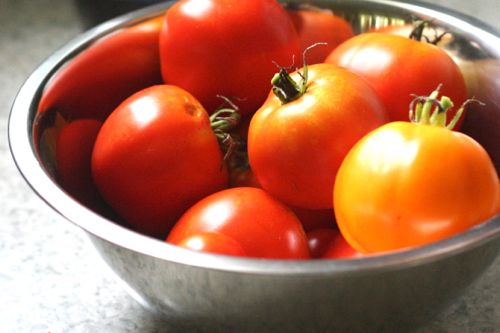
out of the yard

Too many for sandwiches, too few to can.

Marinara

1 T. olive oil
1 medium onion, diced
1 T. minced garlic
2 T. tomato paste (you might could get away without it)
2 c. diced tomatoes
1 c. water
1 t. sugar
1/2 t. salt
grind in some fresh pepper
1 t. dried basil OR 2 T. fresh basil chopped

Heat the oil and cook the onion and garlic until the onion is soft.
Add the tomato paste and heat through.
Add the rest of the ingredients (except the fresh basil), cover the pot loosely and cook about 20 minutes.
Taste and adjust the seasonings if needed. Add the fresh basil.
Leave it alone if you like a chunky sauce. I prefer to puree it with immersion blender for a smoother texture. Makes maybe 4 servings.